Introduction: What Are Network Switches Usually Made Of?
When most people think of a network switch, they picture a small, lightweight device sitting on a desk or mounted near a router.
In reality, most standard network switches are made with plastic housings. This is especially true for devices used in homes, offices, and small businesses.
Plastic is widely used because it is:
- Lightweight and easy to handle
- Cost-effective for mass production
- Sufficient for stable indoor environments
Under normal conditions, where temperature, humidity, and dust levels are controlled, plastic enclosures perform well and meet everyday networking needs.
Why Plastic Is Enough for Everyday Use
In typical environments, network equipment does not face extreme stress.
- Temperatures are relatively stable
- There is minimal dust or moisture exposure
- Devices are rarely subjected to vibration or impact
- Electromagnetic interference is limited
Because of this, plastic housings provide a practical balance between performance and cost. For most users, they are more than adequate.
A Special Case: Industrial Ethernet Switches
However, not all switches operate in such comfortable conditions.
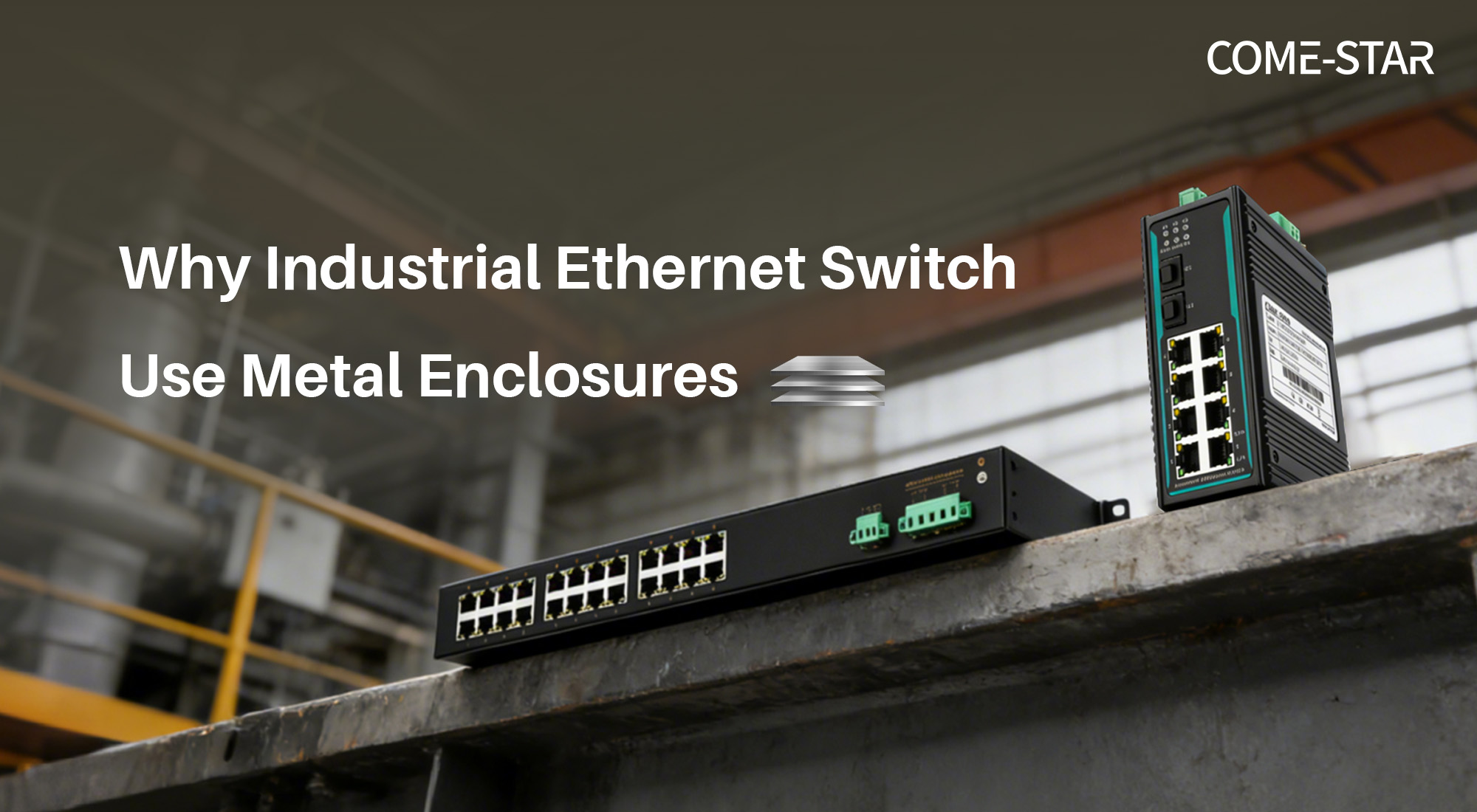
There is a special category called industrial Ethernet switches, designed for harsh environments such as factories, outdoor installations, transportation systems, and energy infrastructure.
Unlike standard switches, these devices are typically built with metal enclosures.
Why Industrial Switches Use Metal Instead of Plastic
Industrial environments introduce challenges that plastic simply cannot handle reliably:
- Extreme temperatures: from freezing cold storage to high-heat production lines
- High humidity and corrosion: coastal areas, chemical plants
- Dust and water exposure: workshops, mines, outdoor cabinets
- Constant vibration: heavy machinery and moving equipment
- Strong electromagnetic interference: motors and industrial systems
To ensure stable operation under these conditions, industrial switches rely on metal housing.
Common Metal Materials in Industrial Switches
Aluminum Alloy (Most Common)
Aluminum alloy is widely used in industrial Ethernet switches because it offers an excellent balance of performance and practicality.
Key benefits:
- Excellent heat dissipation for fanless cooling
- Lightweight and easy to install
- Natural corrosion resistance (enhanced with surface treatment)
- Suitable for compact industrial designs
Steel (For Heavy-Duty Applications)
Steel, including galvanized or stainless steel, is used when maximum strength is required.
Key benefits:
- Very high mechanical strength
- Strong resistance to impact and vibration
- Better protection in demanding environments
- Good electromagnetic shielding
However, steel is heavier and less efficient at dissipating heat compared to aluminum.
Why Metal Makes a Difference
Compared with plastic, metal enclosures provide:
- Better heat management → improves reliability in high temperatures
- Stronger protection → resists shock and vibration
- Corrosion resistance → suitable for harsh environments
- EMI shielding → ensures stable network communication
These advantages are essential for industrial applications but are usually unnecessary in everyday environments.
How to Choose the Right Type
For most users, the choice is simple:
- Home / Office use → Plastic housing is sufficient
- Industrial / Outdoor use → Metal housing is required
If you are deploying networks in harsh environments, it is also important to evaluate:
- IP protection rating
- Operating temperature range
- EMC/EMS performance
- Power redundancy and industrial features
Some industrial networking manufacturers emphasize full metal designs, wide temperature support, and enhanced EMC protection, which can serve as useful indicators when selecting equipment.
Conclusion
Most network switches you encounter daily are made of plastic, and for good reason—they are affordable, lightweight, and perfectly suited for stable indoor environments.
However, in more demanding scenarios, industrial Ethernet switches stand out as a special category, using metal enclosures such as aluminum or steel to ensure durability, reliability, and long-term performance.
Understanding this difference helps you choose the right switch for your specific environment.
Source: COME-STAR Blog (adapted)