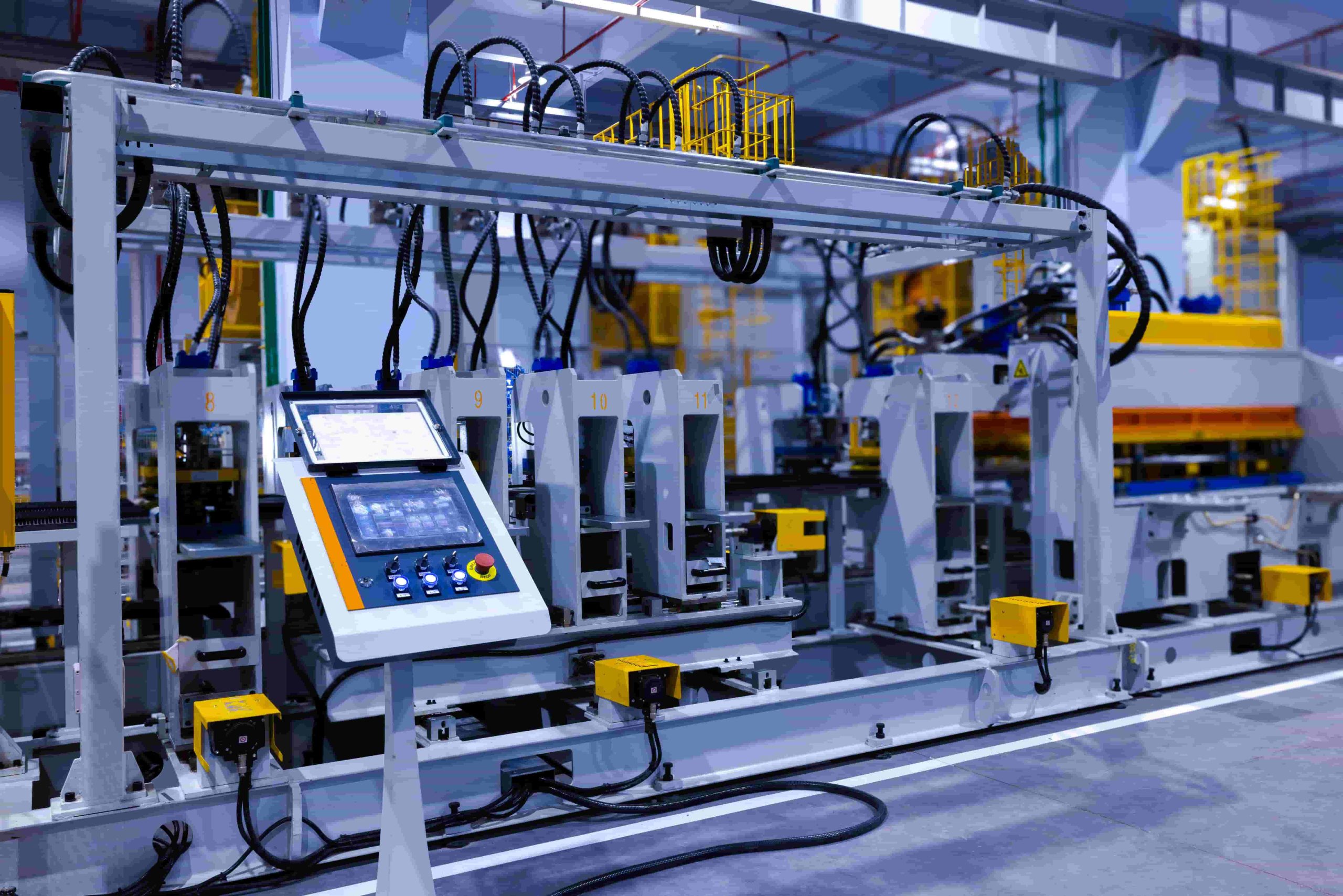
Industrial automation has traditionally relied on wired communication networks, particularly Industrial Ethernet, to ensure reliability, determinism, and high-speed data exchange.
However, as industrial systems become more flexible and mobile, wired networks alone are no longer sufficient to support all use cases. Modern factories increasingly require connectivity for mobile robots, automated guided vehicles (AGVs), remote sensors, and flexible production lines.
This is where industrial wireless technologies, especially Private 5G networks, are beginning to play a major role.
Private 5G promises to deliver the performance, reliability, and security required for industrial applications while enabling a new level of flexibility in connected environments.
Why Wireless Is Becoming Important in Industry
Wireless communication has existed in industrial environments for years through technologies such as Wi-Fi and industrial radio systems.
However, many critical industrial applications avoided wireless due to concerns about reliability, interference, and latency.
Today, industrial requirements are changing. Many emerging applications require connectivity for devices that are constantly moving or located in areas where cables are difficult to install.
Examples include:
-
Autonomous mobile robots
-
Automated guided vehicles (AGVs)
-
Smart warehouses
-
Large outdoor industrial facilities
-
Remote monitoring of infrastructure
Wireless connectivity allows these systems to operate efficiently without physical network constraints.
What Is Private 5G?
Private 5G refers to a dedicated cellular network deployed for a specific organization or industrial facility.
Unlike public cellular networks operated by telecom providers, private 5G networks are designed to serve a limited area such as:
-
Manufacturing plants
-
Ports and logistics hubs
-
Energy facilities
-
Mining operations
-
Airports
These networks can be deployed and managed by the organization itself or in partnership with a telecommunications provider.
Because the network is dedicated to a specific environment, it can be optimized to meet industrial requirements.
Key Advantages of Private 5G for Industry
Private 5G networks offer several capabilities that make them attractive for industrial applications.
Ultra-Low Latency
Industrial applications such as robotics and automated vehicles require extremely fast communication.
Private 5G networks can deliver low latency communication, enabling rapid responses between machines, sensors, and control systems.
Key Advantages of Private 5G for Industry
Private 5G networks offer several capabilities that make them attractive for industrial applications.
Ultra-Low Latency
Industrial applications such as robotics and automated vehicles require extremely fast communication.
Private 5G networks can deliver low latency communication, enabling rapid responses between machines, sensors, and control systems.
Mobility Support
Many industrial devices are mobile, including robots, vehicles, and handheld operator equipment.
Private 5G networks provide seamless connectivity across large facilities, ensuring that moving devices remain connected without communication interruptions.
Improved Security
Because private 5G networks are dedicated to a specific organization, they provide greater control over network access and data traffic.
Industrial operators can implement strict security policies to protect sensitive operational data.
The Relationship Between 5G and Industrial Ethernet
While wireless technologies are gaining importance, Industrial Ethernet will continue to play a central role in industrial communication.
In most architectures, wired and wireless networks will work together.
For example:
-
Industrial Ethernet connects machines and controllers within production lines
-
Edge computing platforms process data locally
-
Private 5G networks connect mobile equipment and remote sensors
This hybrid approach allows organizations to combine the reliability of wired networks with the flexibility of wireless communication.
Challenges to Industrial Wireless Adoption
Despite its potential, private 5G adoption is still evolving.
Organizations must consider several factors before deploying these networks, including:
-
Infrastructure costs
-
Spectrum availability and regulation
-
Integration with existing automation systems
-
Device compatibility
As technology matures and more industrial devices support 5G connectivity, adoption is expected to accelerate.
Toward a More Flexible Industrial Network
The future of industrial connectivity will not rely on a single technology.
Instead, modern industrial environments will use a combination of communication technologies—including Industrial Ethernet, edge computing, and wireless networks—to create flexible and resilient communication infrastructures.
Private 5G represents an important step toward this vision, enabling new levels of mobility, scalability, and connectivity across industrial operations.
Connecting Machines Without Limits
As Industry 4.0 continues to evolve, connectivity must extend beyond fixed production lines to include mobile systems, distributed infrastructure, and intelligent devices.
Private 5G and industrial wireless technologies are opening new possibilities for connected industry—where machines, sensors, and systems communicate seamlessly across complex environments.